
Quick Update!
Subscribe for Weekly Updates on Taiwan's Defense
Hello everyone, apologies for the absence!
It’s been a whirlwind of events with a new job, the start of new classes, new responsibilities and just trying to adjust to the D.C. life. I won’t lie… Washington is nothing like Taipei. I miss the food, the weather, but everyone here at Georgetown is smart, competitive, and ambitious. It’s been great so far, I just miss my 蛋餅.
Alas, I just wanted to give a quick update on what’s happening with this site. As part of an agreement, I now write regular weekly briefings with Taiwan Security Monitor (TSM) that are posted every Monday night (EST). These are part of The Monitor, a repository of policy analysis produced by TSM researchers and fellows. I will also start sending them out here on my Defending Taiwan Substack, but they will live primarily on the TSM website. I will attach a sample below.
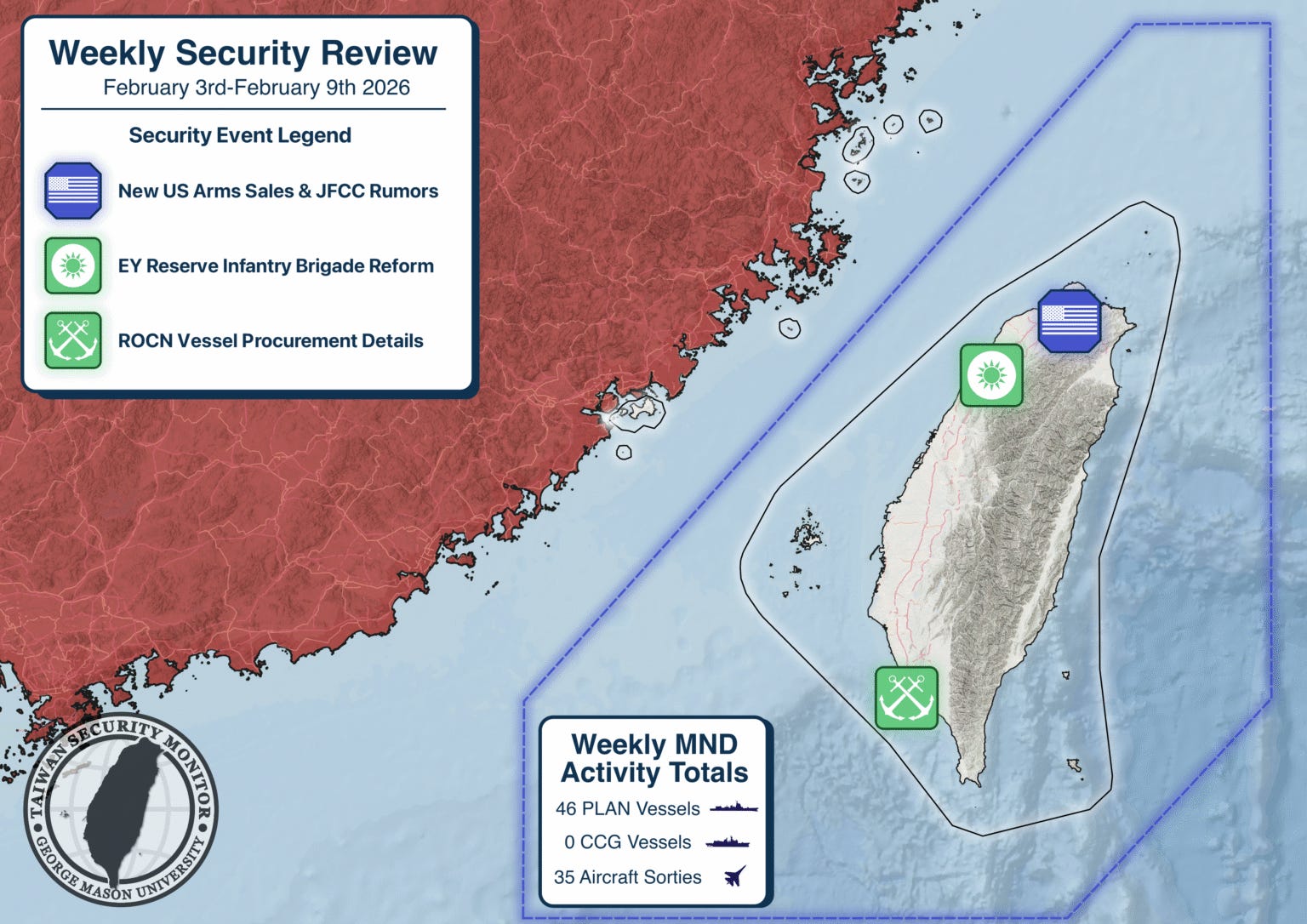
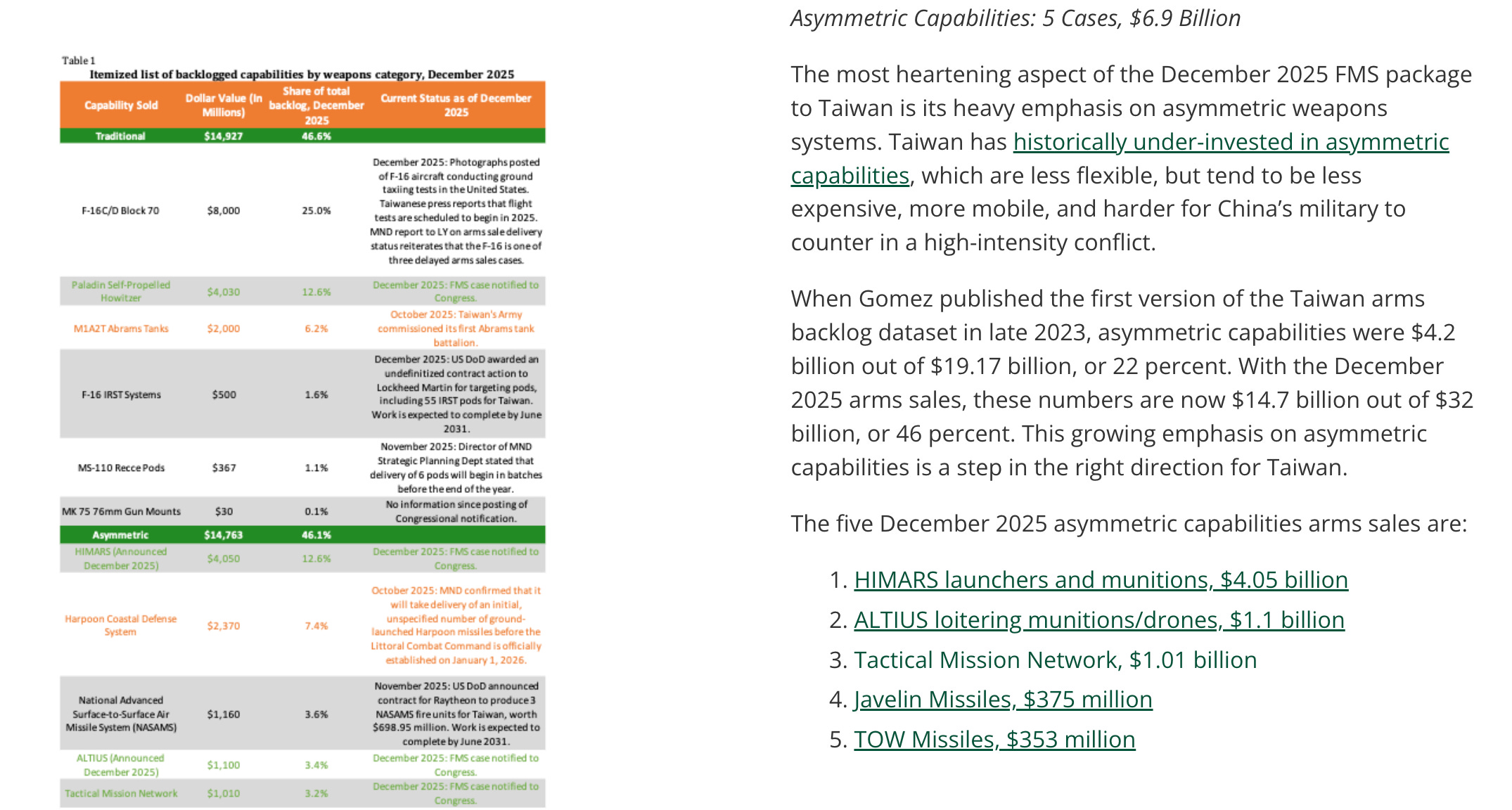
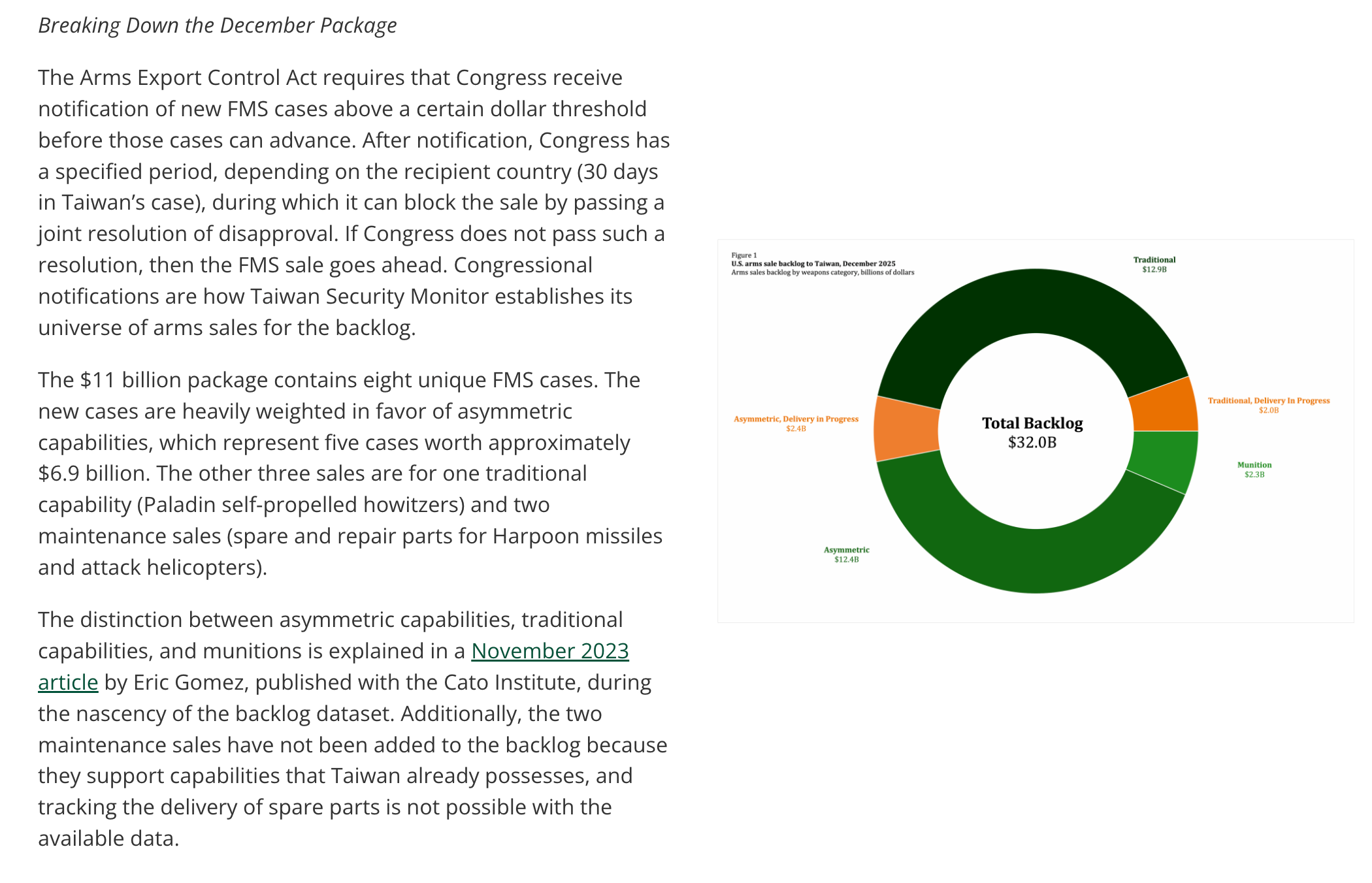
I would also like to showcase our research regarding Taiwan’s Arms Sale Backlog and various U.S.-Taiwan arms sales. This is lead by our other Fellow, Eric Gomez and Research Lead, Joe O’Connor. Our team does in-depth research on literally every single weapon or equipment that Taiwan buys or produces. I highlight recommend checking out those updates for the latest on Taiwan’s arms procurement.
Finally, I just want to thank everyone for their support. I am truly touched every time someone mentions the Substack, TSM, or my previous reporting with TaiwanPlus.
Let me be very clear, the goal of all of this has never been and will never be about making money…its about education, awareness, and the defense of Taiwan. Plain and simple. Thank you for reading and the Substack Chat is open, feel free to chat!
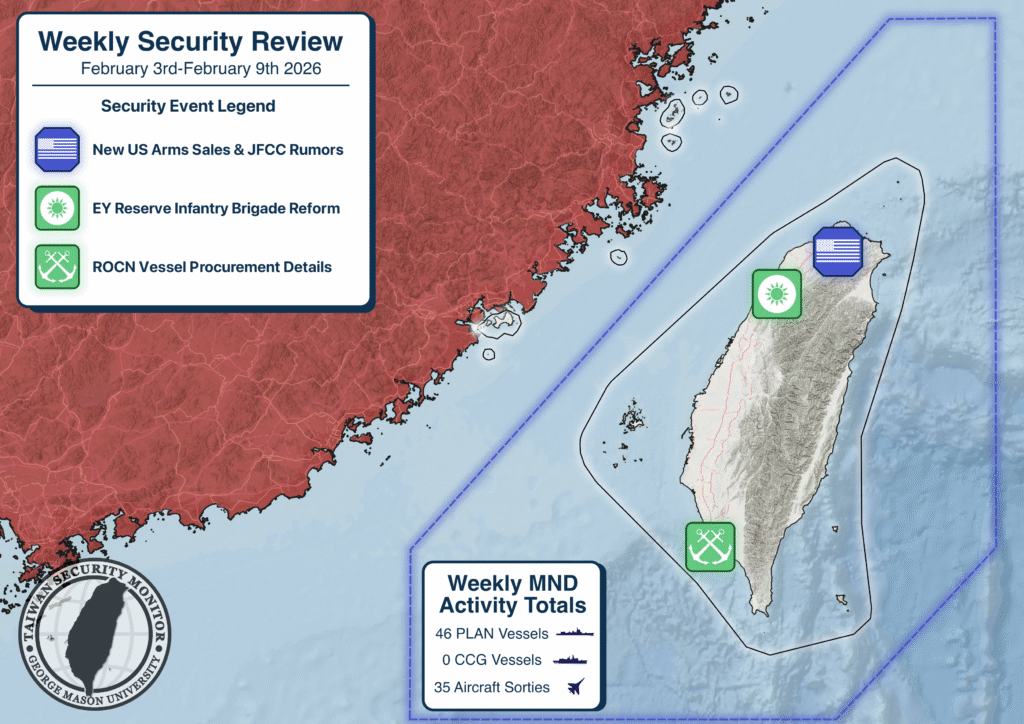
Sample of the Weekly Security Review:
This week, Washington eyes new air defense upgrades for Taiwan, conscripts gear up for enhanced training, talks of a joint U.S.-Taiwan firepower center heat up, and the Navy’s modernization plan raises a big question: How many ships are too many?
FT: U.S. Set to Approve Huge Air Defense Package to Taiwan
A report on Friday, 6 February, from the Financial Times revealed that the U.S. is preparing a set of four new arms packages for Taiwan, including Patriot missiles and launchers, potentially worth up to $20 billion. The prospective deal is also expected to include additional National Advanced Surface-to-Air Missile Systems (NASAMS), as well as two other unknown sales. This comes after the U.S. already approved a US$11 billion arms package, but funding for that deal (part of a special defense budget) is currently stalled in the Legislative Yuan by opposition parties. All eyes are now on the Trump administration and whether or not the proposed sale will be announced to Congress before or after Trump’s trip to China in April. Beijing has warned that any sort of arms deal could derail President Donald Trump’s planned state visit, with Chinese President Xi Jinping personally urging the U.S. to handle Taiwan arms sales “with prudence.”
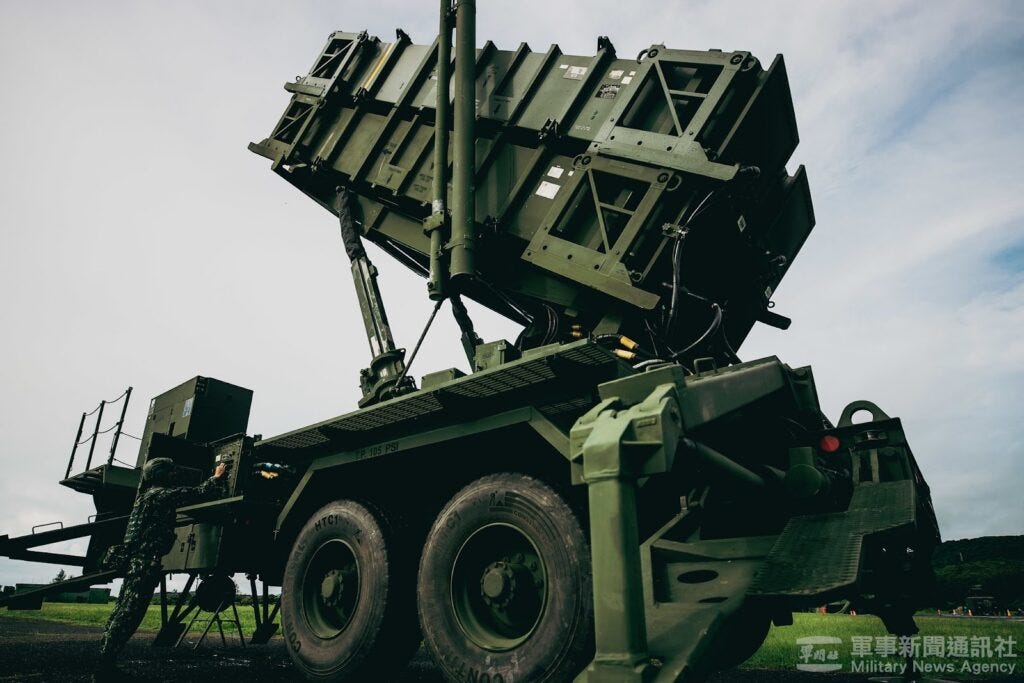
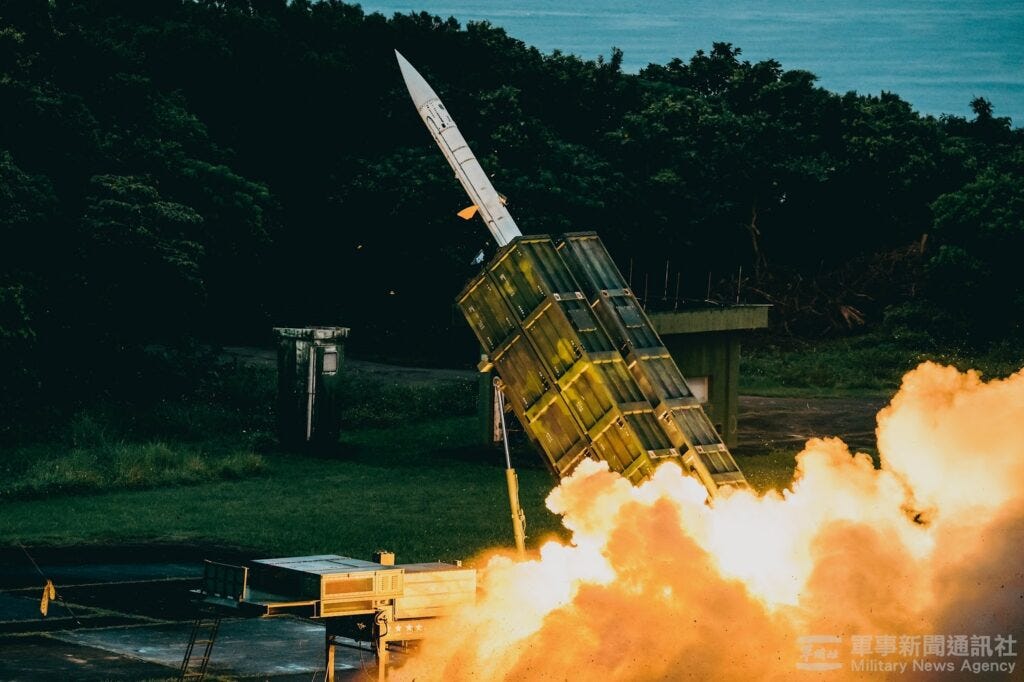
While more willingness from the U.S. to provide defense equipment to Taiwan is great for the country’s defense, it could potentially put Taipei in a difficult position if it is unable to pay on time or at all. Senators Jim Risch (R-ID) and Jeanne Shaheen (D-NH) are among a handful of U.S. lawmakers who have criticized the stalled budget and are putting pressure on Taiwan’s political parties to cooperate and fund the island’s security. The Legislative Yuan, meanwhile, is on winter break until the end of February.
Taiwan Announces Reorganization of Conscripts Units and Training
Taiwan’s Executive Yuan (EY) released a policy report with a detailed overview of major defense reforms, including a change to conscript training. According to the report, starting this year, conscripts will not only be reorganized into battalion-level units but also grouped into combined-arms brigades when conducting the annual Lien Yung live-fire exercise……
While the move is a step in the right direction in terms of the planned quality of training, there are several obstacles and potential roadblocks. The main concern is training capacity and feasibility. According to Chieh Chung, a strategic studies professor at Tamkang University, the advanced 13-week base-level field training could only be properly conducted at two large facilities – Hukou in Hsinchu, northwestern Taiwan, and Baihe in Tainan, southern Taiwan. There is also the concern of a lack of trainers, as without adequate training, this risks labelling units as combat-ready when they might be lacking in quality.